Tuesday, December 9, 2008

for Paul's research- I found it!
Puwar, Nirmal. Space Invaders : Race, Gender and Bodies Out of Place. New York: Berg, 2004. 70-71.
Monday, December 8, 2008
Sunday post 12/07/2008


Jefferson Pinder
- Artist Biography and brief explanation of work (can use quotes from critics or galleries)
PSG is pleased to welcome Jefferson Pinder from Washington, DC in his first exhibition at the gallery. Born in 1970, Pinder received an undergraduate degree in theater, and an MFA in painting and mixed media from the University of Maryland. A video performance artist, he gained national attention with the exhibition Frequency at The Studio Museum in Harlem in 2006. In this exhibition was Car Wash Meditations, a short video of a car rolling through a carwash to the music of Nas’s “Made You Look,” while explosive colors of soap manifest as action painting on the screen. The combination of sound and image is set against a profile of a black man, Pinder, seated in the car. Such is the complexity of Pinder, who intuitively applies his knowledge of music, imagery, and performance to address complex issues of race, ethnicity, and class.
Since that exhibition, Pinder has successfully conjoined music and video in the likes of Shoeshine Variations, Juke, and now Afro Cosmonaut/Alien (White Noise). For this exhibition, Jefferson Pinder presents a single channel video projection along with a series of performance photographs. Afro Cosmonaut/Alien (White Noise) is composed of over 2000 individually posed photographs. Taking cues from late 1960s experimental films, Pinder plants himself within his work and asks the viewer to watch the images of propulsion and power. In the opening of the video, Pinder is seen painting his head and neck with white paint, referencing the performers of Butoh. He places himself in front of a screen, while layered imagery from such sources as ‘60s NASA Apollo footage, Freedom Now marches, Stokely Carmichael, Martin Luther King speeches, and movies such as The Right Stuff, 2001: A Space Odyssey, and Apollo 13 are projected upon him. Using time-lapse animation, Pinder is viewed in the web of the films’ imagery. The music for the video, a pipa played by Liu Fang, matches the cadence of the performance. The title of the music, “The Ambush,” amplifies the sense of exaggerated time.
Afro Cosmonaut/Alien (White Noise) was created in response to an invitation to exhibit at the High Museum of Art in Atlanta for the exhibition After 1968: Contemporary Artists and the Civil Rights Legacy, which opened in June 2008. The exhibition asked the question, How have Black artists born after 1968 feel their expression has changed as a result of the Civil Rights Movement? This question posed many problems for the participants; thus each artist addressed his/her answer in unique, inquiring ways. Jefferson Pinder was interested in exploring the Cosmos, or Space – “Cosmos” implying his vision of an active void. He references Ilya Kabakov's “The Man Who Flew Into Space from his Apartment” as an influence on the feeling and mood he was trying to capture – the conflict of breaking free. Pinder also references a more personal narrative – a memory – as his sister recalls rolling out the TV to watch the NASA Apollo launch, and how it stirred the imaginations of millions of people.
Pinder talks of the final sequences of the performance: "Dr. Martin Luther King’s ‘Mountain Top’ speech was particularly influential toward the end of the piece as a blazing capsule streaks across the picture plane from all angles. The final moments of this performance video do not echo the utopian vision of the Civil Rights Movement, but rather the grim reality of smoldering smoke and a figure that is still standing after a turbulent ride."
Recent exhibitions include shows at the High Museum in Atlanta, the National Portrait Gallery in Washington DC, the Wadsworth Atheneum in Connecticut, the Museum of Contemporary Art in Cleveland and G-Fine Art in Washington DC. Pinder's work has been written about in the Washington Post, the Atlanta Journal-Constitution, Art in America, the New York Times, Artillery, NY Arts magazine, and others.
- a link to an interview with the artist or a review
http://www.npg.si.edu/exhibit/recognize/film.html
- link to gallery representing artist
http://gfineartdc.com/
- artist website
http://0204d77.netsolhost.com/
Art Basil Notes 12/08/2008
Platform gallery Seattle
-jesse Burke
Miller block gallery Boston
-doug bolin
Soil gallery Seattle
-thin heileson (for patrenk)
Danielle arnaud London
-Paulette Phillips
New image gallery California
-deanna tempelton
Billy shire fine arts culver city
-chris mars
Art palace Austin
(Richmond/VCU showing)
Limn art gallery sanfrancisco
OUT gallery Boston
-Oliver warden question?
Howard house
-martin klimas
Research resin coating of photos.
G. Gibson gallery Seattle
-Francesca berrini (collage maps)
Punch gallery Seattle
Hosfelt gallery San francisco/new York
-jim cambell
Sam lee gallery los angeles
John mcguire olsen
Hemphill fine art Washington
Renee stout
Kalup linzy rubel collection. Ferrealz yo!
Country club gallery cincinati oh
Monitor. Rome Italy
-Ra di martinor
Simon Preston gallery new York
-Josh tonesfeld
Espaivisor galeria visior Valencia
-tatiana parcero
Leonhard ruethmueller contemporary art Basel
Galeria fernando pradilla madrid
-pedro meyer
Gallerie voss dusseldorf
-vittorio GUI
Witzenhausen gallery Amsterdam/NYC
-ozone sababa
Craig Scott gallery Toronto
-maleonn
Prometeogalley di Ida piani Milan
-Regina jose galindo
Lyme o reitzel gallery Miami
-juan erlich
Raul vincent enriquez
Stephen cohen gallery LA
-brendan lott. Artiststatement
Tar gallerie dusseldorf
-jasper de beijer
Paci arts brescia
-michal macku
Charles guice contemporary berkley
-hank willis Thomas
PhotoEye gallery Santa fe
-Tom chambers
-eric percher
-maria luisa morando
Nohra haime NYC
-carol k brown
Dpm Miami
-amilcar Paker video!
galleria sicart vilsfranca del peneddes
-nicola constantino
Mk gallerie & cokkie
-Bert sissinght
Bernice steinbaum gallery Miami
-Robert Wilson
Ullens center for contemporary art. Beijing
-teresa diehl
Movement as meditations on modernity
Cisneros fontanals art foundation Miami
-Amilcar packer
The foundation for art and crative technology. Liverpool
-Nick crowe and ian rawlinson
The palazzo delle arti Napoli, pan napels
-bjorn melhus
William siegal gallery Santa de
-Zhang penh
Catherine edelman gallery Chicago
-gregory Scott
-Robert and shana parke Harrison
Gregg kucera gallery Inc Seattle
Gallerie nordine zidoun luxemborg Paris
-McCallum & Tarry
-katerina seda dog stuff for Lauren
Snitzer- Miami
Sent from my iPhone
-jesse Burke
Miller block gallery Boston
-doug bolin
Soil gallery Seattle
-thin heileson (for patrenk)
Danielle arnaud London
-Paulette Phillips
New image gallery California
-deanna tempelton
Billy shire fine arts culver city
-chris mars
Art palace Austin
(Richmond/VCU showing)
Limn art gallery sanfrancisco
OUT gallery Boston
-Oliver warden question?
Howard house
-martin klimas
Research resin coating of photos.
G. Gibson gallery Seattle
-Francesca berrini (collage maps)
Punch gallery Seattle
Hosfelt gallery San francisco/new York
-jim cambell
Sam lee gallery los angeles
John mcguire olsen
Hemphill fine art Washington
Renee stout
Kalup linzy rubel collection. Ferrealz yo!
Country club gallery cincinati oh
Monitor. Rome Italy
-Ra di martinor
Simon Preston gallery new York
-Josh tonesfeld
Espaivisor galeria visior Valencia
-tatiana parcero
Leonhard ruethmueller contemporary art Basel
Galeria fernando pradilla madrid
-pedro meyer
Gallerie voss dusseldorf
-vittorio GUI
Witzenhausen gallery Amsterdam/NYC
-ozone sababa
Craig Scott gallery Toronto
-maleonn
Prometeogalley di Ida piani Milan
-Regina jose galindo
Lyme o reitzel gallery Miami
-juan erlich
Raul vincent enriquez
Stephen cohen gallery LA
-brendan lott. Artiststatement
Tar gallerie dusseldorf
-jasper de beijer
Paci arts brescia
-michal macku
Charles guice contemporary berkley
-hank willis Thomas
PhotoEye gallery Santa fe
-Tom chambers
-eric percher
-maria luisa morando
Nohra haime NYC
-carol k brown
Dpm Miami
-amilcar Paker video!
galleria sicart vilsfranca del peneddes
-nicola constantino
Mk gallerie & cokkie
-Bert sissinght
Bernice steinbaum gallery Miami
-Robert Wilson
Ullens center for contemporary art. Beijing
-teresa diehl
Movement as meditations on modernity
Cisneros fontanals art foundation Miami
-Amilcar packer
The foundation for art and crative technology. Liverpool
-Nick crowe and ian rawlinson
The palazzo delle arti Napoli, pan napels
-bjorn melhus
William siegal gallery Santa de
-Zhang penh
Catherine edelman gallery Chicago
-gregory Scott
-Robert and shana parke Harrison
Gregg kucera gallery Inc Seattle
Gallerie nordine zidoun luxemborg Paris
-McCallum & Tarry
-katerina seda dog stuff for Lauren
Snitzer- Miami
Sent from my iPhone
Tuesday, December 2, 2008
Grad Research Artist Statement and New Semester Work Documentation
3 word statement and new work
Process in creation
link to latest work: http://vimeo.com/2407114
Process in creation
link to latest work: http://vimeo.com/2407114
Sunday, November 23, 2008
Sunday post 11/23/2008
Doug Aitken
- Artist Biography and brief explanation of work (can use quotes from critics or galleries)
Doug Aitken's complex multi media installations address the elaborate inter-relationships between man, media, industry and landscape and the nature and perception of time. The viewer's experience of his installations is as much a process of discovery as the making of the pieces was for the artist. Aitken draws us in as the narratives reveal themselves in intricate spirals in which the viewer is forced to actively engage, both physically by passing through the exhibition space to see the various projections and mentally as the multiple images prevent a single linear interpretation.
- 4 images and / or video/sound clips of artwork


- a link to an interview with the artist or a review
http://www.indexmagazine.com/interviews/werner_herzog.shtml
- link to gallery representing artist
www.303gallery.com
- artist website
http://www.dougaitkenworkshop.com/
- Artist Biography and brief explanation of work (can use quotes from critics or galleries)
Doug Aitken's complex multi media installations address the elaborate inter-relationships between man, media, industry and landscape and the nature and perception of time. The viewer's experience of his installations is as much a process of discovery as the making of the pieces was for the artist. Aitken draws us in as the narratives reveal themselves in intricate spirals in which the viewer is forced to actively engage, both physically by passing through the exhibition space to see the various projections and mentally as the multiple images prevent a single linear interpretation.
- 4 images and / or video/sound clips of artwork


- a link to an interview with the artist or a review
http://www.indexmagazine.com/interviews/werner_herzog.shtml
- link to gallery representing artist
www.303gallery.com
- artist website
http://www.dougaitkenworkshop.com/
Saturday, November 22, 2008
Friday, November 21, 2008
Thursday post 11/20/08 Thoughts of interest – Week in review
* Did anyone critique your work this week? If so, what were their impressions?
I had a meeting with Sonali this week and we took a look at what I've been testing out which is applying jumpcuts instead of disolves in my work. Its not working. Jumpcuts become too abrasive to the body which isn't what I am looking for which is a more meditative feeling. I feel like meditative is the wrong word for what I want to convey but I feel the act of shaving is a meditative action. It's just that at the end, the meditation is no no avail.
* What was the most motivational or creative moment of the past week?
Going to see the scanner lecture. He is the man who composed sound for Steve McQueen's Gravesend. It was a great lecture.
* What do you want to achieve in next week's studio practice?
Shoot one more run through on the shaving bit and edit edit edit
* What did you achieve in your studio this past week?
I found a new way to play with footage that is totally usless to me right now. Other than that just editing up a storm, assisting others. Appplying to the VMFA and other stuff.
* What has been an artistic failure this week?
Being really strapped for time, so much that the stress began to overshadow everything.
* What was the most profound thought in relation to your practice this week?
Happy people make better classmates, better classmates make more productive artist.
* If there was a visiting artist this week, what is your impression of their work and process in relation to your own?
NA
- Post 1 picture, video, etc. of your choice
I had a meeting with Sonali this week and we took a look at what I've been testing out which is applying jumpcuts instead of disolves in my work. Its not working. Jumpcuts become too abrasive to the body which isn't what I am looking for which is a more meditative feeling. I feel like meditative is the wrong word for what I want to convey but I feel the act of shaving is a meditative action. It's just that at the end, the meditation is no no avail.
* What was the most motivational or creative moment of the past week?
Going to see the scanner lecture. He is the man who composed sound for Steve McQueen's Gravesend. It was a great lecture.
* What do you want to achieve in next week's studio practice?
Shoot one more run through on the shaving bit and edit edit edit
* What did you achieve in your studio this past week?
I found a new way to play with footage that is totally usless to me right now. Other than that just editing up a storm, assisting others. Appplying to the VMFA and other stuff.
* What has been an artistic failure this week?
Being really strapped for time, so much that the stress began to overshadow everything.
* What was the most profound thought in relation to your practice this week?
Happy people make better classmates, better classmates make more productive artist.
* If there was a visiting artist this week, what is your impression of their work and process in relation to your own?
NA
- Post 1 picture, video, etc. of your choice
Sunday, November 16, 2008
Complete
Paul Thulin has read your blog up to this point/entry. Your blog is currently up to date and complete.
Sunday post 11/16/2008
1. Sunday Entry: Bruce Nauman
Highlight an artist of interest that relates to your work. Provide the following information:
- Artist Biography and brief explanation of work (can use quotes from critics or galleries)
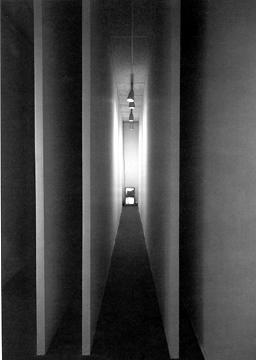
Born in 1941 in Fort Wayne, Indiana, Bruce Nauman has been recognized since the early 1970s as one of the most innovative and provocative of America’s contemporary artists. Nauman finds inspiration in the activities, speech, and materials of everyday life. Confronted with “What to do?” in his studio soon after graduating from the University of Wisconsin, Madison, in 1964 with a BFA, and then the University of California, Davis in 1966 with an MFA, Nauman had the simple but profound realization that “If I was an artist and I was in the studio, then whatever I was doing in the studio must be art. At this point art became more of an activity and less of a product.” Working in the diverse mediums of sculpture, video, film, printmaking, performance, and installation, Nauman concentrates less on the development of a characteristic style and more on the way in which a process or activity can transform or become a work of art. A survey of his diverse output demonstrates the alternately political, prosaic, spiritual, and crass methods by which Nauman examines life in all its gory details, mapping the human arc between life and death. The text from an early neon work proclaims: “The true artist helps the world by revealing mystic truths.” Whether or not we—or even Nauman—agree with this statement, the underlying subtext of the piece emphasizes the way in which the audience, artist, and culture at large are involved in the resonance a work of art will ultimately have. Nauman lives in New Mexico.
- 4 images and / or video/sound clips of artwork


- a link to an interview with the artist or a review
http://www.pbs.org/art21/artists/nauman/clip1.html
- link to gallery representing artist
http://www.speronewestwater.com/cgi-bin/iowa/index.html
- artist website
Highlight an artist of interest that relates to your work. Provide the following information:
- Artist Biography and brief explanation of work (can use quotes from critics or galleries)
Born in 1941 in Fort Wayne, Indiana, Bruce Nauman has been recognized since the early 1970s as one of the most innovative and provocative of America’s contemporary artists. Nauman finds inspiration in the activities, speech, and materials of everyday life. Confronted with “What to do?” in his studio soon after graduating from the University of Wisconsin, Madison, in 1964 with a BFA, and then the University of California, Davis in 1966 with an MFA, Nauman had the simple but profound realization that “If I was an artist and I was in the studio, then whatever I was doing in the studio must be art. At this point art became more of an activity and less of a product.” Working in the diverse mediums of sculpture, video, film, printmaking, performance, and installation, Nauman concentrates less on the development of a characteristic style and more on the way in which a process or activity can transform or become a work of art. A survey of his diverse output demonstrates the alternately political, prosaic, spiritual, and crass methods by which Nauman examines life in all its gory details, mapping the human arc between life and death. The text from an early neon work proclaims: “The true artist helps the world by revealing mystic truths.” Whether or not we—or even Nauman—agree with this statement, the underlying subtext of the piece emphasizes the way in which the audience, artist, and culture at large are involved in the resonance a work of art will ultimately have. Nauman lives in New Mexico.
- 4 images and / or video/sound clips of artwork


- a link to an interview with the artist or a review
http://www.pbs.org/art21/artists/nauman/clip1.html
- link to gallery representing artist
http://www.speronewestwater.com/cgi-bin/iowa/index.html
- artist website
Thursday, November 13, 2008
Thursday post 11/13/08
* Did anyone critique your work this week? If so, what were their impressions?
Stephen Vitello did. He thought my sound was interesting and engaging- as it pulled and eluded at his attention. The two images he wished were separated. He found the pairing good and found the tension between the two good but we agreed that subtly trying to engergizing both sides a little more might be a good thing. Drew a comparison to Bruce nauman. On the whole he brought up similar but very different concerns and most of all different reads. His sound system is better and let my soundtrack really come through.
* What was the most motivational or creative moment of the past week?
Listening to the binaural recording I made of a midnight parade on election night.
* What do you want to achieve in next week's studio practice?
Figure out all the FINAL CUT export problems and have something that looks even better….oh yeah and shot some more…..and edit….anything else? Maybe. Just feel productive.
* What did you achieve in your studio this past week?
Re shot new sequence in video successfully tried to edit based on a suggestion- jumpcuts instead of smooth transitions.
* What has been an artistic failure this week?
1.Jumpcuts didn’t work the way I feel they should with the piece.
2. Computer can’t handel all of this
* What was the most profound thought in relation to your practice this week?
Finished Election night piece.
* If there was a visiting artist this week, what is your impression of their work and process in relation to your own?
NA
- Post 1 picture, video, etc. of your choice
Stephen Vitello did. He thought my sound was interesting and engaging- as it pulled and eluded at his attention. The two images he wished were separated. He found the pairing good and found the tension between the two good but we agreed that subtly trying to engergizing both sides a little more might be a good thing. Drew a comparison to Bruce nauman. On the whole he brought up similar but very different concerns and most of all different reads. His sound system is better and let my soundtrack really come through.
* What was the most motivational or creative moment of the past week?
Listening to the binaural recording I made of a midnight parade on election night.
* What do you want to achieve in next week's studio practice?
Figure out all the FINAL CUT export problems and have something that looks even better….oh yeah and shot some more…..and edit….anything else? Maybe. Just feel productive.
* What did you achieve in your studio this past week?
Re shot new sequence in video successfully tried to edit based on a suggestion- jumpcuts instead of smooth transitions.
* What has been an artistic failure this week?
1.Jumpcuts didn’t work the way I feel they should with the piece.
2. Computer can’t handel all of this
* What was the most profound thought in relation to your practice this week?
Finished Election night piece.
* If there was a visiting artist this week, what is your impression of their work and process in relation to your own?
NA
- Post 1 picture, video, etc. of your choice
Sunday, November 9, 2008
Sunday post 11/09/2008
Sanford Biggers
- Artist Biography and brief explanation of work (can use quotes from critics or galleries)
A native of Los angeles, California and a resident of New York, Sanford Biggers creates multi-disciplinary artworks that integrate film/video installation, sculpture, music and performance. Influenced by his experiences living throughout the United States, Europe and Japan, and by Buddhism, hip-hop and urban culture, Biggers’ work is known for its combination of meditative rigor and improvisatory edge.
Sanford Biggers’ installations, videos, and performances have appeared in venues worldwide including the Tate Modern, London, Whitney Museum, New York, Studio Museum, Harlem, and the Yerba Buena Center for the Arts, San Francisco, as well as institutions in China, Germany, Hungary, Japan, Poland and Russia. He has had solo exhibitions at Grand Arts, Kansas City, Mary Goldman Gallery, Los Angeles, Triple Candie, New York, Contemporary Art Museum, Houston, Matrix/Univ.of Berkeley Museum, Berkeley, and Zamek Ujazdowski, Warsaw. He is the recipient of awards and grants from the Creative Capital Foundation, New York Percent for the Arts, Lambent Fellowship in the Arts, New York Foundation for the Arts, Tanne Foundation, and the Rema Hort Mann Foundation, among others.
Biggers is presently an Assistant Professor of Sculpture and Expanded Media at Virginia Commonwealth University, and is represented by Mary Goldman Gallery, Los Angeles.
- 4 images and / or video/sound clips of artwork


- a link to an interview with the artist or a review
http://findarticles.com/p/articles/mi_m1248/is_1_93/ai_n8591035/pg_1
- link to gallery representing artist
http://mariangoodman.com/mg/nyc.html
- artist website
http://www.sanfordbiggers.com
- Artist Biography and brief explanation of work (can use quotes from critics or galleries)
A native of Los angeles, California and a resident of New York, Sanford Biggers creates multi-disciplinary artworks that integrate film/video installation, sculpture, music and performance. Influenced by his experiences living throughout the United States, Europe and Japan, and by Buddhism, hip-hop and urban culture, Biggers’ work is known for its combination of meditative rigor and improvisatory edge.
Sanford Biggers’ installations, videos, and performances have appeared in venues worldwide including the Tate Modern, London, Whitney Museum, New York, Studio Museum, Harlem, and the Yerba Buena Center for the Arts, San Francisco, as well as institutions in China, Germany, Hungary, Japan, Poland and Russia. He has had solo exhibitions at Grand Arts, Kansas City, Mary Goldman Gallery, Los Angeles, Triple Candie, New York, Contemporary Art Museum, Houston, Matrix/Univ.of Berkeley Museum, Berkeley, and Zamek Ujazdowski, Warsaw. He is the recipient of awards and grants from the Creative Capital Foundation, New York Percent for the Arts, Lambent Fellowship in the Arts, New York Foundation for the Arts, Tanne Foundation, and the Rema Hort Mann Foundation, among others.
Biggers is presently an Assistant Professor of Sculpture and Expanded Media at Virginia Commonwealth University, and is represented by Mary Goldman Gallery, Los Angeles.
- 4 images and / or video/sound clips of artwork
- a link to an interview with the artist or a review
http://findarticles.com/p/articles/mi_m1248/is_1_93/ai_n8591035/pg_1
- link to gallery representing artist
http://mariangoodman.com/mg/nyc.html
- artist website
http://www.sanfordbiggers.com
Wednesday, November 5, 2008
Thursday post 11/06/08

* Did anyone critique your work this week? If so, what were their impressions?
no
* What was the most motivational or creative moment of the past week?
It would seem that an election that sends millions of people into the streets may qualify
* What do you want to achieve in next week's studio practice?
More work- more shooting-get feedback-start th cycle over again until I get it right.
* What did you achieve in your studio this past week?
New footage for present project, new sound for new project
* What has been an artistic failure this week?
John McCain
* What was the most profound thought in relation to your practice this week?
that I just need to concentrate on making this one thing better.
* If there was a visiting artist this week, what is your impression of their work and process in relation to your own?
NA
- Post 1 picture, video, etc. of your choice


Grad Research Artist Statement and New Semester Work Documentation
My art practice is rooted in the concept of perpetual human struggle. By staging performative actions that give rise to issues of repetitive, restless tasking without distinct resolution, I attempt to use my body as a metaphor to explore the emotional alienation and struggle that occurs in every day life.
Sunday, November 2, 2008
Pitts Grad Research Assignment: Discussion Questions on Article or Essay
How does shock art get reinterpreted by those who once championed it?
It seems that shock art is very much the haven for the young, but not always...But it does seems like the way that young people gravitate to it and older people tend to gravitate away from it as it becomes childish or passe. Does this mean shock art is not dead? It seems that as long as there is an established hireaarchy of anything shock will be viable. Of course the method and the execution will still always be critiqued, but as Bremer illustrated-you don't have to call it art for it to be shocking.
In a secondary realm, the discussion of consent and context seems like just a convienent way of justifying the punked nature of being called over the hill. Is there anytime that under the justification of shock art one can say off limits, or "just not now?"
I feel that if shock is where your heart is that no moment is off limit, no subject to shy away from. It is an oppositional attitude to take but it has its place in time and uses as Barhtes would say to disorganize and to destroy. Everything deserves to get shaken up.
Pitts Grad Research Assignment: Discussion Questions on Article or Essay
In the conversation between Doug Aitken and Robert Altman they discuss the concept of collaberation or at least what goes into making one of his films since he is a larger budget film maker. I am interested in at what point a project becomes a point of us/our and mine. It seems like there are a lot of people who get lots of credit for movies, films and art in general where they may not be the "creative force behind" the bang or the zing of the final project. But at the same time they may have been the one who thought of the idea with out which the house falls apart. Is it simply a parlayance of the word "collaboration" when two artist mutually agree to try out a partnership? I think that perhapse a simple acknolwledgement is enough. Or perhapse a creation of a collaborative name or collective so that the individual names become secondary to the work created or the aims of the project.
Later in that same conversation Robert Altman talks about the concept of improvasation in perticular dialog. He says he is not overly concerned with what the characters are saying with specific words rather what they are saying more interms of conveying atmosphere. Do you think a geneal audience of art seekes are more inclined to think along these lines with mediums such as painting and sculpture than with say film, video or sound? I feel like with sound art that often times confronts language or subverts language it is very hard for many listeners to fully invest in projects that deviate from the standard listening practice. Video and film, especially in the exerimental realm is very hard to grasp. But when either separately or together attempt to define or shape an emotion, or emotional space, the spectators have the same sort of hurdle to hop as there are two elements that they aren't used to justifying. The run of the mill western art lover has a hard time justifying anything frivolous. Frivolity seems to be attached to art except when an established authority has spoken for it. So that your Michelangelo's and Cezanne's are perfectly legitament for people to justify a little time, but to sit in a dark space and watch projections of the sunlight reflected off of glass structures whith a soundtrack meant for calm and meditation is harder to sit through. Robert altman points out that being able to experince a thing first hand is the most visceral of experinces so it makes it doubly hard when the aim is to take a primary experience, say of light reflecting, and then bring it inside where it can be then expereinces for the first time with the inclusion of sound and have people sit with it. What is it about the inabilty to concentrate and therefore contemplate the here and now that people get frustrated by having to sit through something new? Looking for something new is all I ever want to find.
Aitken, Doug. Broken screen expanding the image, breaking the narrative 26 conversations with doug aitkin. New York, NY: D.A.P/ Distributed Art, Inc., 2006. 26-37.
Later in that same conversation Robert Altman talks about the concept of improvasation in perticular dialog. He says he is not overly concerned with what the characters are saying with specific words rather what they are saying more interms of conveying atmosphere. Do you think a geneal audience of art seekes are more inclined to think along these lines with mediums such as painting and sculpture than with say film, video or sound? I feel like with sound art that often times confronts language or subverts language it is very hard for many listeners to fully invest in projects that deviate from the standard listening practice. Video and film, especially in the exerimental realm is very hard to grasp. But when either separately or together attempt to define or shape an emotion, or emotional space, the spectators have the same sort of hurdle to hop as there are two elements that they aren't used to justifying. The run of the mill western art lover has a hard time justifying anything frivolous. Frivolity seems to be attached to art except when an established authority has spoken for it. So that your Michelangelo's and Cezanne's are perfectly legitament for people to justify a little time, but to sit in a dark space and watch projections of the sunlight reflected off of glass structures whith a soundtrack meant for calm and meditation is harder to sit through. Robert altman points out that being able to experince a thing first hand is the most visceral of experinces so it makes it doubly hard when the aim is to take a primary experience, say of light reflecting, and then bring it inside where it can be then expereinces for the first time with the inclusion of sound and have people sit with it. What is it about the inabilty to concentrate and therefore contemplate the here and now that people get frustrated by having to sit through something new? Looking for something new is all I ever want to find.
Aitken, Doug. Broken screen expanding the image, breaking the narrative 26 conversations with doug aitkin. New York, NY: D.A.P/ Distributed Art, Inc., 2006. 26-37.
Sunday post 11/01/2008
Name-
Björn Melhus
Bio-
Born in 1966 in Germany; '85-'86 Filmschule, Stuttgart; '85-'87 Adolf-Lazi-Schule, private professional college for photography and audiovision, Stuttgart; '88 free art at the Hochschule der Bildenden Künste, Braunschweig; works mainly in film, video and video installations; lives in Berlin.
- 4 images and / or video/sound clips of artwork


- a link to an interview with the artist or a review
http://jemly-thesisproto.blogspot.com/2007_02_01_archive.html
- link to gallery representing artist
Galerie Anita Beckers: www.galerie-beckers.de
- artist website
http://www.melhus.de/
Björn Melhus
Bio-
Born in 1966 in Germany; '85-'86 Filmschule, Stuttgart; '85-'87 Adolf-Lazi-Schule, private professional college for photography and audiovision, Stuttgart; '88 free art at the Hochschule der Bildenden Künste, Braunschweig; works mainly in film, video and video installations; lives in Berlin.
- 4 images and / or video/sound clips of artwork

- a link to an interview with the artist or a review
http://jemly-thesisproto.blogspot.com/2007_02_01_archive.html
- link to gallery representing artist
Galerie Anita Beckers: www.galerie-beckers.de
- artist website
http://www.melhus.de/
Wednesday, October 29, 2008
Thursday post 10/29/08
Thoughts of interest – Week in review
- Answer the following questions:
* Did anyone critique your work this week? If so, what were their impressions?
I had a group crit and an individual crit which was positive. I had a lot of questions about the work which were addressed very well.
* What was the most motivational or creative moment of the past week?
Placing 386 cross dissolves in my work over the course of one weekend. It’s a record.
* What do you want to achieve in next week's studio practice?
Have a lot of feedback on my work and make some decisions on how to proceed.
* What did you achieve in your studio this past week?
“Finished” a piece for crit. Tried once more to pair orphan clips to create meaning.
* What has been an artistic failure this week?
Not enough sleep and scraping supposedly saved work.
* What was the most profound thought in relation to your practice this week?
That there is validity in the instinctual.
* If there was a visiting artist this week, what is your impression of their work and process in relation to your own?
NA
- Post 1 picture, video, etc. of your choice
If you thought you ever had a bad crit!
- Answer the following questions:
* Did anyone critique your work this week? If so, what were their impressions?
I had a group crit and an individual crit which was positive. I had a lot of questions about the work which were addressed very well.
* What was the most motivational or creative moment of the past week?
Placing 386 cross dissolves in my work over the course of one weekend. It’s a record.
* What do you want to achieve in next week's studio practice?
Have a lot of feedback on my work and make some decisions on how to proceed.
* What did you achieve in your studio this past week?
“Finished” a piece for crit. Tried once more to pair orphan clips to create meaning.
* What has been an artistic failure this week?
Not enough sleep and scraping supposedly saved work.
* What was the most profound thought in relation to your practice this week?
That there is validity in the instinctual.
* If there was a visiting artist this week, what is your impression of their work and process in relation to your own?
NA
- Post 1 picture, video, etc. of your choice
If you thought you ever had a bad crit!
Sunday, October 26, 2008
Sunday post 10/25/2008
MARINA ABRAMOVIC
Since the beginning of her career in Belgrade during the early 1970s, Marina Abramovic has pioneered the use of performance as a visual art form. The body has always been both her subject and medium. Exploring the physical and mental limits of her being, she has withstood pain, exhaustion, and danger in the quest for emotional and spiritual transformation. The tensions of abandonment and control lay at the heart of her series of performances known as Rhythms (1973–74). In Rhythm 5, Abramovic lay down inside the blazing frame of a wooden star. With her oxygen supply depleted by the fire, she lost consciousness and had to be rescued by concerned onlookers. In Rhythm 0, she invited her audience to do whatever they wanted to her using any of the 72 items she provided: pen, scissors, chains, axe, loaded pistol, and others. Truly ephemeral, Abramovic's earliest performances were documented only by crude black-and-white photographs and descriptive texts, which she published as an edition years later. Since 1976 she has utilized video to capture the temporal nature of her art. Cleaning the Mirror #1 shows videos of a haunting performance in which Abramovic scrubs a grime-covered human skeleton on her lap. Rich with metaphor, this three-hour action recalls, among other things, Tibetan death rites that prepare disciples to become one with their own mortality.
- 4 images and / or video/sound clips of artwork

- a link to an interview with the artist or a review
http://www.jca-online.com/abramovic.html
- link to gallery representing artist
http://seecult.org/v-web/gallery/albums.php
- artist website
http://profile.myspace.com/index.cfm?fuseaction=user.viewprofile&friendID=338869754
Since the beginning of her career in Belgrade during the early 1970s, Marina Abramovic has pioneered the use of performance as a visual art form. The body has always been both her subject and medium. Exploring the physical and mental limits of her being, she has withstood pain, exhaustion, and danger in the quest for emotional and spiritual transformation. The tensions of abandonment and control lay at the heart of her series of performances known as Rhythms (1973–74). In Rhythm 5, Abramovic lay down inside the blazing frame of a wooden star. With her oxygen supply depleted by the fire, she lost consciousness and had to be rescued by concerned onlookers. In Rhythm 0, she invited her audience to do whatever they wanted to her using any of the 72 items she provided: pen, scissors, chains, axe, loaded pistol, and others. Truly ephemeral, Abramovic's earliest performances were documented only by crude black-and-white photographs and descriptive texts, which she published as an edition years later. Since 1976 she has utilized video to capture the temporal nature of her art. Cleaning the Mirror #1 shows videos of a haunting performance in which Abramovic scrubs a grime-covered human skeleton on her lap. Rich with metaphor, this three-hour action recalls, among other things, Tibetan death rites that prepare disciples to become one with their own mortality.
- 4 images and / or video/sound clips of artwork

- a link to an interview with the artist or a review
http://www.jca-online.com/abramovic.html
- link to gallery representing artist
http://seecult.org/v-web/gallery/albums.php
- artist website
http://profile.myspace.com/index.cfm?fuseaction=user.viewprofile&friendID=338869754
Friday, October 24, 2008
Complete
Paul Thulin has read your blog up to this point/entry. Your blog is currently up to date and complete.
-Love the "what they did versus the what they are video". Next week lets focus on the intrique -- the motivational force of your work. What are the insights given to you by your current portfolio? Share the energy with me.
-Love the "what they did versus the what they are video". Next week lets focus on the intrique -- the motivational force of your work. What are the insights given to you by your current portfolio? Share the energy with me.
Thursday, October 23, 2008
Thursday post 10/23/08
Thoughts of interest – Week in review
- Answer the following questions:
* Did anyone critique your work this week? If so, what were their impressions?
Yes, I met with Sonali today and we spoke of a variety of things, including sound textures I made for one of my video pieces and how that was working- which was good. And we talked about how I want to integrate some of the videos that I have been shooting into a full piece and how that will manifest.
* What was the most motivational or creative moment of the past week?
Feeling like I have a clue for what I am doing that isn't so obvious and technical
* What do you want to achieve in next week's studio practice?
Put it all together and shake it all around. And get critiqued on it.
* What did you achieve in your studio this past week?
Swapping files and managing memorey, not spelling well and recording sound.
* What has been an artistic failure this week?
Not having a large enough hardrive...yet(its on order)
* What was the most profound thought in relation to your practice this week?
That I am really angry and I needed to recognize it instead of suppress it.
* If there was a visiting artist this week, what is your impression of their work and process in relation to your own?
NA
- Post 1 picture, video, etc. of your choice
- Answer the following questions:
* Did anyone critique your work this week? If so, what were their impressions?
Yes, I met with Sonali today and we spoke of a variety of things, including sound textures I made for one of my video pieces and how that was working- which was good. And we talked about how I want to integrate some of the videos that I have been shooting into a full piece and how that will manifest.
* What was the most motivational or creative moment of the past week?
Feeling like I have a clue for what I am doing that isn't so obvious and technical
* What do you want to achieve in next week's studio practice?
Put it all together and shake it all around. And get critiqued on it.
* What did you achieve in your studio this past week?
Swapping files and managing memorey, not spelling well and recording sound.
* What has been an artistic failure this week?
Not having a large enough hardrive...yet(its on order)
* What was the most profound thought in relation to your practice this week?
That I am really angry and I needed to recognize it instead of suppress it.
* If there was a visiting artist this week, what is your impression of their work and process in relation to your own?
NA
- Post 1 picture, video, etc. of your choice
Wednesday, October 22, 2008
One Word 10/22/2008
Word: Physicality
Definition:
Main Entry:
phys·i·cal·i·ty Listen to the pronunciation of physicality
Pronunciation: \ˌfi-zə-ˈka-lə-tē\
Function: noun
Inflected Form(s): plural phys·i·cal·i·ties
Date: 1660
1 : intensely physical orientation : predominance of the physical usually at the expense of the mental, spiritual, or social 2 : a physical aspect or quality
Artist 1:
Artist Name: Kate Gilmore
Reason for Choosing:
Kate's work resonates with me in terms of her use of her own body in her art at the cost of her flesh. I think that with the artist I have chosen there is a sense of being present in their work. A sense of guts- at the expense of the flesh.... I think what sets her apart from the rest is the empathy one feel after and while watching her work.
Image 1 of Artwork- Include Title,Year, Medium, Dimensions

Image 2 of Artwork- Include Title,Year, Medium, Dimensions

Outside Review of Artwork: A 2-3 paragraph quote
Kate Gilmore loves a challenge. For her performance-based video works, she sets up a difficult physical task—a precarious tower of strung-together furniture to climb, for instance—dons lipstick and a fancy dress, and documents herself making the attempt. She has jumped rope on a perforated wooden platform while wearing stilettos (Double Dutch, 2004), ascended a slippery ramp in rollerskates (Cake Walk, 2005), and forced her satin-clad body through a tiny tunnel (Main Squeeze, 2006).
The dogged persistence of Gilmore's protagonists suggests the obsessive behavior that can characterize daily efforts to cope with high expectations. These dolled-up women seem desperate for success, love, or attention—desires traditionally bound up with gender and the condition of artmaking. In all of her projects, Gilmore strives for compositional perfection, and her incongruous party clothes are always perfectly coordinated with the installation itself. Combining physical comedy, palpable effort, and a whiff of real danger, Gilmore's work evokes time-based "endurance" work of the 1970s, such as that of Vito Acconci, and expands on feminist and performance art in the tradition of Joan Jonas and Marina Abramovic.
Bibliography of Review:
ICA: Institute of Contemporary Art. University of Pennslyvania..
Artist 2:
Artist Name: Chris burden
Reason for Choosing:
I don't really care if he distancees himself from most of his early work, it is still very visceral and seems to tempt the concept of life. Sure it's from a very young minded perspective, very male perspective, but I think there are a lot of people in the world that very much align themselves to this way of thinking or at least spirit. For good or ill.
Image 1 of Artwork- Include Title,Year, Medium, Dimensions

Image 2 of Artwork- Include Title,Year, Medium, Dimensions

Outside Review of Artwork: A 2-3 paragraph quote
Burden's reputation as a performance artist started to grow in the early 1970s after he made a series of controversial performances in which the idea of personal danger as artistic expression was central. His most well-known act from that time is perhaps the performance piece Shoot that was made in F Space in Santa Ana, California in 1971, in which he was shot in his left arm by an assistant from a distance of about five meters. Burden was taken to a psychiatrist after this piece. Other performances from the 1970's were Five Day Locker Piece (1971), Deadman (1972), B.C. Mexico (1973), Fire Roll (1973), TV Hijack (1972), Doomed (1975) and Honest Labor (1979).
Several of Burden's performance pieces were considered somewhat controversial at the time. Shoot, for example, involved Burden allowing an assistant to fire a loaded rifle at his arm. Another such "danger piece" was Doomed, in which Burden lay motionless in a museum gallery under a slanted sheet of glass, with a clock running nearby. Unbeknownst to the museum owners, the concept of Doomed was that Chris was prepared to remain in that position until someone from the museum staff interfered in some way with the piece. Forty-five hours later, a museum guard placed a pitcher of water next to Burden, thus ending the piece.
Bibliography of Review
"An introduction to Chris Burden." Thomas Moronic..
Artist 3:
Artist Name: Joseph boeys
Reason for Choosing:
The mythology of Joseph Boeuys is vast, but it is the combination of the desire to be in the world, and apart of living in this world that is most interesting. Again it is this sense of being physically here-present with in the work that comes out and extends this sense of artistic mythology, the ability to be so at times misunderstood or perhapse mysterious but at the same time often be so clear and direct.
Image 1 of Artwork- Include Title,Year, Medium, Dimensions

Image 2 of Artwork- Include Title,Year, Medium, Dimensions

Outside Review of Artwork: A 2-3 paragraph quote
This is a dense, evocative exhibition that presents Beuys as both teacher and artist; it is accompanied by two videotapes that demonstrate the considerable charisma he brought to each activity. It gives us an artist of rich, not always resolvable contradictions, a man as interested in ancient myth as in television, who used videotapes to mythologize himself. It reveals an artist who deployed eccentric, often decaying materials like felt and fat in his sculptures and performances, yet who was a consummate draftsman in the traditional sense of those words.
As Beuys says in one of the videotapes on display here, he believed in ''creativity as a revolutionary means existing in everyone,'' and his frequent use of multiples - art objects produced in large editions - made his work widely and, for a time, inexpensively available. Yet, with the ego and assurance of a great artist, he also turned such things as Polaroid negatives and felt blackboard erasers into artworks simply by adding his own signature.
Bibliography of Review
SMITH, ROBERTA. "Review/Art; Joseph Beuys asTeacher and Artist." New York Times. 25 Nov. 1988..
Artist 4:
Artist Name: Ana Mendieta
Reason for Choosing:
Anyone that play with blood has my ear. playing with blood sounds cliche until you realize your actually playing with BLOOD! The nectar of life the driver, the conduit for the pulse. There is a obviously a problem with the concept of primitive other however there is rightfully so a place who do it well. Ana seems to my mind operate as some sort of ghost rather than some primitive shaman(or priestess) someone working in between the here and now and the past, emotion and reason reminding us of the connectedness to all things....in a really disturbing way.
Image 1 of Artwork- Include Title,Year, Medium, Dimensions

Image 2 of Artwork- Include Title,Year, Medium, Dimensions

Outside Review of Artwork: A 2-3 paragraph quote
Mendieta sought to establish a "dialog between the landscape and the female body return to the maternal source." She envisioned the female body as a primal source of life and sexuality, as a symbol of the ancient paleolithic goddesses. Between 1973 and 1980, Mendieta created her signature series, entitled "Silueta" or silhouette. Here, Mendieta used her body or images of her body in combination with natural materials. The pieces were transient, created and then photographed just before or during their destruction. The materials used were highly symbolic. In one work from the "Silueta" series, she outlined her figure with gunpowder, creating a shape reminiceint of prehistoric cave paintings. By setting it alight, she incorporates the ritualistic use of fire as a source of exorcism and purification. Mendieta also used flowers as mediums in her series, quoting the folk traditions of Mexico. Her primary material was the earth itself. In her "Tree of Life" series, she covered her naked body with mud and posed against and enormous tree. Ridding herself of her color and form, she is visually united with the tree, arms raised in supplication.
Bibliography of Review
"Ana Mendieta." Women's Issues In 20th Century Art. Keller Clark University..
Artist 5:
Artist Name: Matthew barney
Reason for Choosing:
His work seems so body centered as it is, not to mention the theatricality of how the body moves seems to superceed all else. His concepts are very obtuse at times but are pretty. However it is the fact that his films are a circus for the body to work out all these different stories, conflicts, puzzels, etc.
Image 1 of Artwork- Include Title,Year, Medium, Dimensions

Image 2 of Artwork- Include Title,Year, Medium, Dimensions

Outside Review of Artwork: A 2-3 paragraph quote
Barney has an eye for a certain kind of repellent modern beauty, the look of the cyborg age. His love affair, as an artist, is with the inorganic. He has discovered a new sculptural material, a range of sophisticated modern plastics that look weirdly fleshy: "prosthetic plastic", in his words. It's not hard to see the contemporary pertinence of this. Today, with science-fiction fantasies of robots and artificial intelligence no longer fiction, he's the Jean Cocteau of this cyborg age.
Some kind of cyborg does seem to have been at work in the Serpentine. In the big, domed central gallery, you come across the detritus of a sinister ritual act. There is a metal pole soaring straight up from the floor into the dome. Around the floor are bizarre, clumsy shoes, oil drums full of vaseline, a bunch of umbilical cord-like appendages and hoists; at the four corners of the room, tiny climbing footholds; and four rough, shaky drawings high up. This room is by far the best in the exhibition. It shows the sceptic why Barney matters: no one else has captured the aesthetic of our mutant age so well. It's just as well it works - because nothing else does.
Bibliography of Review
Jones, Jonathan. "Barney's rubble." The Guardian. 20 Sept. 2007..
Artist 6:
Artist Name: Carolee Schneeman
Reason for Choosing:
Because there seems to be an abandon about her in terms of her art and use of the body. Not recklessness but a willingness to give herself over to art and explore from a very 1st person point of view. It also seems that it is a very "I will show you" sort of mentality-"I will teach you" I feel might not go into how I feel about beuys but still very close.
Image 1 of Artwork- Include Title,Year, Medium, Dimensions

Image 2 of Artwork- Include Title,Year, Medium, Dimensions

Outside Review of Artwork: A 2-3 paragraph quote
Carolee Schneeman's artworks can have the impression of innocence. The viewer, upon first glance, see's red dye dripped on snow in heart shapes or sees red paint applied to delicate sheets of tissue. The viewer then looks at the gallery tag and reads the media involved in the work. Blood. Menstral blood on tissue. Blood as a feminine symbol of power and beauty instead of a symbol of violence.
Schneeman's art work originates from the female body's urges and it's media is the body's functions. Through interior contemplation of the rythmns and desires of her body, she creates artworks that are shocking and physical. Primarily a performance artist, her body explorations are varied experiences. She writhes naked with a group of others amidst chunks of raw meat or she pulls a scroll stained with menstral blood from her vagina. By shocking the audience, in a subtle way or not, Schneeman has created compelling works that challenge the taboos associated with the female body.
Bibliography of Review
"Carolee Schneeman." Women's Issues In 20th Century Art. Keller Clark University..
Artist 7:
Artist Name: Francis Alys
Reason for Choosing:
Pushing a block of ice through the streets seems like a great and powerful statement without having to articulate any sort of intellectual viewpoint. But Alys work especially centered around community and connectivity on a social side is very interesting and I admire true street artists (as I call them) as it seems that what the represent is not a random or obvious comment on society but seems to encompass so much more.
Image 1 of Artwork- Include Title,Year, Medium, Dimensions

Image 2 of Artwork- Include Title,Year, Medium, Dimensions

Outside Review of Artwork: A 2-3 paragraph quote
The procession took place on June 23, beginning at MoMA's midtownlocation at 11 West 53 Street and moving across the Queensboro Bridge, up Queens Boulevard to MoMA QNS on 33 Street. Participants in the procession carried palanquins holding representations of works in the Museum's collection by artists such as Pablo Picasso, Marcel Duchamp, and Alberto Giacometti. The event-with its rose petal-strewn route and brass band-had the feel of a religious procession, like the one in Little Italy's famous annual San Gennaro festival. "Francis Alÿs has responded to this moment of transition for the museum by devising a timely and provocative performance," said Ms. Montgomery. "With this piece, he has encouraged us all to reflect fondly on our relationships with modern icons and to find mystical meaning in unexpected contexts."
For Alÿs, the street is a site of invigorating possibility and confluence, a space where the complexity of popular life collides and interacts with the practice of making art. Since 1991, going on paseos (walks) has been the centerpiece of Alÿs's artistic practice, and the urban streets, especially those of Mexico City, have been his primary context. His works in various mediums are born out of these walks, during which he often carries a prop and adheres to a whimsical route or pattern of behavior. He records his path and the results of his walk, collects artifacts, and stores images, all of which he later uses in his drawings and paintings.
Bibliography of Review
"MoMA Projects 76." Postmedia. Museum of Modern Art..
Artist 8:
Artist Name: Vito Acconci
Reason for Choosing:
Part of the physicality of thereness I think is a wierd sort of spectre of myth and playing with a flimsy sense of reality in reality of being. The seem to be very few people that challenge the fabric of the way we percieve things-especially in art and I think that in an age where even what we do "see" can be justified as fiction, it is important to be physicaly present and tangeble that as views change there is a visceral quality that cannot be escaped.
Image 1 of Artwork- Include Title,Year, Medium, Dimensions

Image 2 of Artwork- Include Title,Year, Medium, Dimensions

Outside Review of Artwork: A 2-3 paragraph quote
In a side gallery, Other Voices for a Second Sight offered another version of this obsession with the presence of the artist. Originally shown at MOMA in 1974, the installation is built to resemble an audio recording studio, complete with walls paneled with brown acoustical board and a swivel chair facing a bank of audio equipment. On either side of this studio is a reflective window looking onto another room, where images of Acconci, projected by means of slides or film loops through translucent plastic sheets and fabrics, are rendered barely legible by flashes of light. In the central room, the sound of the artist's running autobiographical recitation competes with other, assorted recorded noises.
In this work Acconci's body is placed largely outside the field of vision, leaving only audible traces of his presence. Is it the artist or the viewer who is meant to assume the role of sound engineer? In any case, in this "theatricalized" setting the distance that usually separates scene and audience, artist and viewer, effectively collapses.
Bibliography of Review
Marino, Melanie. "Vito Acconci at Barbara Gladstone." Bnet. Nov. 1998. Art in America..
Artist 9:
Artist Name: John Bock
Reason for Choosing:
To a certain extent it is his absurdly reality that makes him interesting. In all manner and shapes and sizes humanity exist. To exist is to reaffirm being and to confront and overcome the average, the status quo, everyday that is john Boch. Again like I said before you can fake somethings just with CG and a TiVo. John Boch's videos are so grounded in a way that me pause to say "that is really wierd...but I can relate to it."
Image 1 of Artwork- Include Title,Year, Medium, Dimensions

Image 2 of Artwork- Include Title,Year, Medium, Dimensions

Outside Review of Artwork: A 2-3 paragraph quote
John Bock's Lectures are performances where the artist uses his own sculptures as sets and props and his own manipulated words and invented language as a means to challenge and confront human relationships. Admittedly frantic and devoid of 'proper' syntax, his Lectures integrate theories and terminology from psychology to economics and from art history to popular culture, while Bock engages in a continuous role-playing of different illogical personae, interweaving stories and situations that emerge as absurd, often hilarious, sometimes threatening or violent, and poetic.
Bibliography of Review
"JOHN BOCK A Lecture & Film Retrospective." E-flux. 22 Oct. 2008..
Artist 10:
Artist Name: Paul McCarthy
Reason for Choosing:
It pretty much the same sort of thing. I am still kind of learning about him but it goes back to the idea that the body does something and is important-the physicality and the presence that comes along with is powerful. I am not talking about how the statue of david is a body and has presence rather the way bodiess react and cerate space by being and moving in real time, it isn't simply about the body but what it does, and what it means to be present and active.
Image 1 of Artwork- Include Title,Year, Medium, Dimensions

Image 2 of Artwork- Include Title,Year, Medium, Dimensions

Outside Review of Artwork: A 2-3 paragraph quote
In short, professor McCarthy, who has taught art at UCLA since 1982, continues to annoy, and in the process resists either art-rag or art-establishment packaging. A West Coast rather than an East Coast favorite, he is neither the last of the Destruction Artists nor the first of the shamans. "Paul McCarthy: Central Symmetrical Rotation Movement" at the Whitney until Oct. 12 offers up a disconcerting chunk of his sometimes clownish but almost always provocative/evocative anti-art displays. His 2001 New Museum extravaganza was nearly destroyed by faint praise. His most disconcerting works - e.g. a performance involving sticking a Barbie doll into his rectum or the 2007 Santa Clause with a Buttplug inflatable --- are nowhere to be seen. Someone is cleaning up his act.
Nevertheless, even Whitney curator Chrissie Isles when she tries to confront the pared down McCarthy can't quite pin him down. In her catalogue essay, she traces McCarthy's work to the influence of Destruction Artists such as Ralph Ortiz and Hermann Nitsch, but then connects him to everyone under the flag of darkness, from Francis Bacon to Vito Acconci. Isles does her best to weave all available references and citations together in a critical fiction that almost reaches coherence, yet still misses the convulsive nature of McCarthy's art. Convulsive art deserves a convulsive text. If it can still be said that there are Dionysian and Apollonian extremities of the art spectrum, McCarthy belongs with those of the Dionysian persuasion.
Bibliography of Review
Perreault, John. "Paul McCarthy Spin; Eliasson Falls; Bourgeois Fails." Artopia John Perreault's art diary..
Definition:
Main Entry:
phys·i·cal·i·ty Listen to the pronunciation of physicality
Pronunciation: \ˌfi-zə-ˈka-lə-tē\
Function: noun
Inflected Form(s): plural phys·i·cal·i·ties
Date: 1660
1 : intensely physical orientation : predominance of the physical usually at the expense of the mental, spiritual, or social 2 : a physical aspect or quality
Artist 1:
Artist Name: Kate Gilmore
Reason for Choosing:
Kate's work resonates with me in terms of her use of her own body in her art at the cost of her flesh. I think that with the artist I have chosen there is a sense of being present in their work. A sense of guts- at the expense of the flesh.... I think what sets her apart from the rest is the empathy one feel after and while watching her work.
Image 1 of Artwork- Include Title,Year, Medium, Dimensions

Image 2 of Artwork- Include Title,Year, Medium, Dimensions

Outside Review of Artwork: A 2-3 paragraph quote
Kate Gilmore loves a challenge. For her performance-based video works, she sets up a difficult physical task—a precarious tower of strung-together furniture to climb, for instance—dons lipstick and a fancy dress, and documents herself making the attempt. She has jumped rope on a perforated wooden platform while wearing stilettos (Double Dutch, 2004), ascended a slippery ramp in rollerskates (Cake Walk, 2005), and forced her satin-clad body through a tiny tunnel (Main Squeeze, 2006).
The dogged persistence of Gilmore's protagonists suggests the obsessive behavior that can characterize daily efforts to cope with high expectations. These dolled-up women seem desperate for success, love, or attention—desires traditionally bound up with gender and the condition of artmaking. In all of her projects, Gilmore strives for compositional perfection, and her incongruous party clothes are always perfectly coordinated with the installation itself. Combining physical comedy, palpable effort, and a whiff of real danger, Gilmore's work evokes time-based "endurance" work of the 1970s, such as that of Vito Acconci, and expands on feminist and performance art in the tradition of Joan Jonas and Marina Abramovic.
Bibliography of Review:
ICA: Institute of Contemporary Art. University of Pennslyvania.
Artist 2:
Artist Name: Chris burden
Reason for Choosing:
I don't really care if he distancees himself from most of his early work, it is still very visceral and seems to tempt the concept of life. Sure it's from a very young minded perspective, very male perspective, but I think there are a lot of people in the world that very much align themselves to this way of thinking or at least spirit. For good or ill.
Image 1 of Artwork- Include Title,Year, Medium, Dimensions

Image 2 of Artwork- Include Title,Year, Medium, Dimensions

Outside Review of Artwork: A 2-3 paragraph quote
Burden's reputation as a performance artist started to grow in the early 1970s after he made a series of controversial performances in which the idea of personal danger as artistic expression was central. His most well-known act from that time is perhaps the performance piece Shoot that was made in F Space in Santa Ana, California in 1971, in which he was shot in his left arm by an assistant from a distance of about five meters. Burden was taken to a psychiatrist after this piece. Other performances from the 1970's were Five Day Locker Piece (1971), Deadman (1972), B.C. Mexico (1973), Fire Roll (1973), TV Hijack (1972), Doomed (1975) and Honest Labor (1979).
Several of Burden's performance pieces were considered somewhat controversial at the time. Shoot, for example, involved Burden allowing an assistant to fire a loaded rifle at his arm. Another such "danger piece" was Doomed, in which Burden lay motionless in a museum gallery under a slanted sheet of glass, with a clock running nearby. Unbeknownst to the museum owners, the concept of Doomed was that Chris was prepared to remain in that position until someone from the museum staff interfered in some way with the piece. Forty-five hours later, a museum guard placed a pitcher of water next to Burden, thus ending the piece.
Bibliography of Review
"An introduction to Chris Burden." Thomas Moronic.
Artist 3:
Artist Name: Joseph boeys
Reason for Choosing:
The mythology of Joseph Boeuys is vast, but it is the combination of the desire to be in the world, and apart of living in this world that is most interesting. Again it is this sense of being physically here-present with in the work that comes out and extends this sense of artistic mythology, the ability to be so at times misunderstood or perhapse mysterious but at the same time often be so clear and direct.
Image 1 of Artwork- Include Title,Year, Medium, Dimensions

Image 2 of Artwork- Include Title,Year, Medium, Dimensions

Outside Review of Artwork: A 2-3 paragraph quote
This is a dense, evocative exhibition that presents Beuys as both teacher and artist; it is accompanied by two videotapes that demonstrate the considerable charisma he brought to each activity. It gives us an artist of rich, not always resolvable contradictions, a man as interested in ancient myth as in television, who used videotapes to mythologize himself. It reveals an artist who deployed eccentric, often decaying materials like felt and fat in his sculptures and performances, yet who was a consummate draftsman in the traditional sense of those words.
As Beuys says in one of the videotapes on display here, he believed in ''creativity as a revolutionary means existing in everyone,'' and his frequent use of multiples - art objects produced in large editions - made his work widely and, for a time, inexpensively available. Yet, with the ego and assurance of a great artist, he also turned such things as Polaroid negatives and felt blackboard erasers into artworks simply by adding his own signature.
Bibliography of Review
SMITH, ROBERTA. "Review/Art; Joseph Beuys asTeacher and Artist." New York Times. 25 Nov. 1988.
Artist 4:
Artist Name: Ana Mendieta
Reason for Choosing:
Anyone that play with blood has my ear. playing with blood sounds cliche until you realize your actually playing with BLOOD! The nectar of life the driver, the conduit for the pulse. There is a obviously a problem with the concept of primitive other however there is rightfully so a place who do it well. Ana seems to my mind operate as some sort of ghost rather than some primitive shaman(or priestess) someone working in between the here and now and the past, emotion and reason reminding us of the connectedness to all things....in a really disturbing way.
Image 1 of Artwork- Include Title,Year, Medium, Dimensions

Image 2 of Artwork- Include Title,Year, Medium, Dimensions

Outside Review of Artwork: A 2-3 paragraph quote
Mendieta sought to establish a "dialog between the landscape and the female body return to the maternal source." She envisioned the female body as a primal source of life and sexuality, as a symbol of the ancient paleolithic goddesses. Between 1973 and 1980, Mendieta created her signature series, entitled "Silueta" or silhouette. Here, Mendieta used her body or images of her body in combination with natural materials. The pieces were transient, created and then photographed just before or during their destruction. The materials used were highly symbolic. In one work from the "Silueta" series, she outlined her figure with gunpowder, creating a shape reminiceint of prehistoric cave paintings. By setting it alight, she incorporates the ritualistic use of fire as a source of exorcism and purification. Mendieta also used flowers as mediums in her series, quoting the folk traditions of Mexico. Her primary material was the earth itself. In her "Tree of Life" series, she covered her naked body with mud and posed against and enormous tree. Ridding herself of her color and form, she is visually united with the tree, arms raised in supplication.
Bibliography of Review
"Ana Mendieta." Women's Issues In 20th Century Art. Keller Clark University.
Artist 5:
Artist Name: Matthew barney
Reason for Choosing:
His work seems so body centered as it is, not to mention the theatricality of how the body moves seems to superceed all else. His concepts are very obtuse at times but are pretty. However it is the fact that his films are a circus for the body to work out all these different stories, conflicts, puzzels, etc.
Image 1 of Artwork- Include Title,Year, Medium, Dimensions

Image 2 of Artwork- Include Title,Year, Medium, Dimensions

Outside Review of Artwork: A 2-3 paragraph quote
Barney has an eye for a certain kind of repellent modern beauty, the look of the cyborg age. His love affair, as an artist, is with the inorganic. He has discovered a new sculptural material, a range of sophisticated modern plastics that look weirdly fleshy: "prosthetic plastic", in his words. It's not hard to see the contemporary pertinence of this. Today, with science-fiction fantasies of robots and artificial intelligence no longer fiction, he's the Jean Cocteau of this cyborg age.
Some kind of cyborg does seem to have been at work in the Serpentine. In the big, domed central gallery, you come across the detritus of a sinister ritual act. There is a metal pole soaring straight up from the floor into the dome. Around the floor are bizarre, clumsy shoes, oil drums full of vaseline, a bunch of umbilical cord-like appendages and hoists; at the four corners of the room, tiny climbing footholds; and four rough, shaky drawings high up. This room is by far the best in the exhibition. It shows the sceptic why Barney matters: no one else has captured the aesthetic of our mutant age so well. It's just as well it works - because nothing else does.
Bibliography of Review
Jones, Jonathan. "Barney's rubble." The Guardian. 20 Sept. 2007.
Artist 6:
Artist Name: Carolee Schneeman
Reason for Choosing:
Because there seems to be an abandon about her in terms of her art and use of the body. Not recklessness but a willingness to give herself over to art and explore from a very 1st person point of view. It also seems that it is a very "I will show you" sort of mentality-"I will teach you" I feel might not go into how I feel about beuys but still very close.
Image 1 of Artwork- Include Title,Year, Medium, Dimensions

Image 2 of Artwork- Include Title,Year, Medium, Dimensions

Outside Review of Artwork: A 2-3 paragraph quote
Carolee Schneeman's artworks can have the impression of innocence. The viewer, upon first glance, see's red dye dripped on snow in heart shapes or sees red paint applied to delicate sheets of tissue. The viewer then looks at the gallery tag and reads the media involved in the work. Blood. Menstral blood on tissue. Blood as a feminine symbol of power and beauty instead of a symbol of violence.
Schneeman's art work originates from the female body's urges and it's media is the body's functions. Through interior contemplation of the rythmns and desires of her body, she creates artworks that are shocking and physical. Primarily a performance artist, her body explorations are varied experiences. She writhes naked with a group of others amidst chunks of raw meat or she pulls a scroll stained with menstral blood from her vagina. By shocking the audience, in a subtle way or not, Schneeman has created compelling works that challenge the taboos associated with the female body.
Bibliography of Review
"Carolee Schneeman." Women's Issues In 20th Century Art. Keller Clark University.
Artist 7:
Artist Name: Francis Alys
Reason for Choosing:
Pushing a block of ice through the streets seems like a great and powerful statement without having to articulate any sort of intellectual viewpoint. But Alys work especially centered around community and connectivity on a social side is very interesting and I admire true street artists (as I call them) as it seems that what the represent is not a random or obvious comment on society but seems to encompass so much more.
Image 1 of Artwork- Include Title,Year, Medium, Dimensions

Image 2 of Artwork- Include Title,Year, Medium, Dimensions

Outside Review of Artwork: A 2-3 paragraph quote
The procession took place on June 23, beginning at MoMA's midtownlocation at 11 West 53 Street and moving across the Queensboro Bridge, up Queens Boulevard to MoMA QNS on 33 Street. Participants in the procession carried palanquins holding representations of works in the Museum's collection by artists such as Pablo Picasso, Marcel Duchamp, and Alberto Giacometti. The event-with its rose petal-strewn route and brass band-had the feel of a religious procession, like the one in Little Italy's famous annual San Gennaro festival. "Francis Alÿs has responded to this moment of transition for the museum by devising a timely and provocative performance," said Ms. Montgomery. "With this piece, he has encouraged us all to reflect fondly on our relationships with modern icons and to find mystical meaning in unexpected contexts."
For Alÿs, the street is a site of invigorating possibility and confluence, a space where the complexity of popular life collides and interacts with the practice of making art. Since 1991, going on paseos (walks) has been the centerpiece of Alÿs's artistic practice, and the urban streets, especially those of Mexico City, have been his primary context. His works in various mediums are born out of these walks, during which he often carries a prop and adheres to a whimsical route or pattern of behavior. He records his path and the results of his walk, collects artifacts, and stores images, all of which he later uses in his drawings and paintings.
Bibliography of Review
"MoMA Projects 76." Postmedia. Museum of Modern Art.
Artist 8:
Artist Name: Vito Acconci
Reason for Choosing:
Part of the physicality of thereness I think is a wierd sort of spectre of myth and playing with a flimsy sense of reality in reality of being. The seem to be very few people that challenge the fabric of the way we percieve things-especially in art and I think that in an age where even what we do "see" can be justified as fiction, it is important to be physicaly present and tangeble that as views change there is a visceral quality that cannot be escaped.
Image 1 of Artwork- Include Title,Year, Medium, Dimensions

Image 2 of Artwork- Include Title,Year, Medium, Dimensions

Outside Review of Artwork: A 2-3 paragraph quote
In a side gallery, Other Voices for a Second Sight offered another version of this obsession with the presence of the artist. Originally shown at MOMA in 1974, the installation is built to resemble an audio recording studio, complete with walls paneled with brown acoustical board and a swivel chair facing a bank of audio equipment. On either side of this studio is a reflective window looking onto another room, where images of Acconci, projected by means of slides or film loops through translucent plastic sheets and fabrics, are rendered barely legible by flashes of light. In the central room, the sound of the artist's running autobiographical recitation competes with other, assorted recorded noises.
In this work Acconci's body is placed largely outside the field of vision, leaving only audible traces of his presence. Is it the artist or the viewer who is meant to assume the role of sound engineer? In any case, in this "theatricalized" setting the distance that usually separates scene and audience, artist and viewer, effectively collapses.
Bibliography of Review
Marino, Melanie. "Vito Acconci at Barbara Gladstone." Bnet. Nov. 1998. Art in America.
Artist 9:
Artist Name: John Bock
Reason for Choosing:
To a certain extent it is his absurdly reality that makes him interesting. In all manner and shapes and sizes humanity exist. To exist is to reaffirm being and to confront and overcome the average, the status quo, everyday that is john Boch. Again like I said before you can fake somethings just with CG and a TiVo. John Boch's videos are so grounded in a way that me pause to say "that is really wierd...but I can relate to it."
Image 1 of Artwork- Include Title,Year, Medium, Dimensions

Image 2 of Artwork- Include Title,Year, Medium, Dimensions

Outside Review of Artwork: A 2-3 paragraph quote
John Bock's Lectures are performances where the artist uses his own sculptures as sets and props and his own manipulated words and invented language as a means to challenge and confront human relationships. Admittedly frantic and devoid of 'proper' syntax, his Lectures integrate theories and terminology from psychology to economics and from art history to popular culture, while Bock engages in a continuous role-playing of different illogical personae, interweaving stories and situations that emerge as absurd, often hilarious, sometimes threatening or violent, and poetic.
Bibliography of Review
"JOHN BOCK A Lecture & Film Retrospective." E-flux. 22 Oct. 2008.
Artist 10:
Artist Name: Paul McCarthy
Reason for Choosing:
It pretty much the same sort of thing. I am still kind of learning about him but it goes back to the idea that the body does something and is important-the physicality and the presence that comes along with is powerful. I am not talking about how the statue of david is a body and has presence rather the way bodiess react and cerate space by being and moving in real time, it isn't simply about the body but what it does, and what it means to be present and active.
Image 1 of Artwork- Include Title,Year, Medium, Dimensions

Image 2 of Artwork- Include Title,Year, Medium, Dimensions

Outside Review of Artwork: A 2-3 paragraph quote
In short, professor McCarthy, who has taught art at UCLA since 1982, continues to annoy, and in the process resists either art-rag or art-establishment packaging. A West Coast rather than an East Coast favorite, he is neither the last of the Destruction Artists nor the first of the shamans. "Paul McCarthy: Central Symmetrical Rotation Movement" at the Whitney until Oct. 12 offers up a disconcerting chunk of his sometimes clownish but almost always provocative/evocative anti-art displays. His 2001 New Museum extravaganza was nearly destroyed by faint praise. His most disconcerting works - e.g. a performance involving sticking a Barbie doll into his rectum or the 2007 Santa Clause with a Buttplug inflatable --- are nowhere to be seen. Someone is cleaning up his act.
Nevertheless, even Whitney curator Chrissie Isles when she tries to confront the pared down McCarthy can't quite pin him down. In her catalogue essay, she traces McCarthy's work to the influence of Destruction Artists such as Ralph Ortiz and Hermann Nitsch, but then connects him to everyone under the flag of darkness, from Francis Bacon to Vito Acconci. Isles does her best to weave all available references and citations together in a critical fiction that almost reaches coherence, yet still misses the convulsive nature of McCarthy's art. Convulsive art deserves a convulsive text. If it can still be said that there are Dionysian and Apollonian extremities of the art spectrum, McCarthy belongs with those of the Dionysian persuasion.
Bibliography of Review
Perreault, John. "Paul McCarthy Spin; Eliasson Falls; Bourgeois Fails." Artopia John Perreault's art diary.
Sunday, October 19, 2008
Hassan Grad Research Assignment: Discussion Questions on Article or Essay
Pope L., William. William Pope. L : The Friendliest Black Artist in America. By Mark H. Bessire. New York: MIT P, 2002.
The Article is entitled Bocio.
In the article William Pope L. asks the question whether or not he as an African-American can appropriate bocio for his own uses as an artist. He did not come up with the original association between his own work and the concept of bocio; Cair Crawford has done this for him. Bocio translates to “empowered cadaver” and comes from West Africa, its traditions similar to voodoo. My question is: At what point can you claim and therefore take ownership to a concept that someone else places on your work? This I find as a paradox of intention vs. interpretation. Pope L. posits this “Why look a gift horse in the mouth?” meaning if someone finds something of interest in your work that was unintended the best answer is to try and understand what that means and what it ultimately means or can mean for yourself. I think part of the idea of writing this article was to express just this point. To be on the record on having thought about it and therefore making an attempt to speak to the claims that this other person has staked upon his work. It is not to deny or demean but simply to weigh in on the idea. I say to not demean, in that Pope L. recognizes that he is not a scholar in the field of bocio or West-African studies. He knows what he knows. This also speaks to the notion he expresses a concern as how to separate what his interpretation will and can be from the expectations of others knowledgeable or not.
In his article Pope L. talks about the need and uses of masks employed by black people in this country over the years. Is the aim of the article to simply answer a simple claim about the relationship of Pope L.’s work and bocio or is there some other aim at work? I feel that there is a fair connection that should be made between the idea of adopting an idea or concept when someone else has struck a new claim of knowing what your work is about. An easy way of approaching this subject is to speak of the “sell-out.” Ms. Crawford has asserted this so-called connection to bocio in Pope L.’s work and he certainly has a right to accept or defend his work against such a claim. There is a sense that such an endorsement in the form of academic interest only lends Pope L. more credibility in scholarly and artistic communities. Pope L. seems to take this opportunity to point out this odd boon if you will. The opportunity to don a mask of cultural acceptability. Pope L. uses examples like Cab Calloway, Bert Williams and Jean-Michel Basquit who all in a way (you might say) sold out to a persona, one that was offered by mass culture/dominant culture. The opportunity of the mask such as outsider artist, minstrel, and showman would provide the assurance of work and pay if not the ability to pursue ones craft. But each had its drawbacks, their own limitations even if one eventually rose above them. Bert Williams for example performed in black face because it was unacceptable for several years for a black entertainer to be less black than the black make up that comprised the “black face.” Each instance or mask reduces the artist down to a single dimension rooted in some sort of primal simplification. So Pope L. Seems to answer the complexity of the gift horse that is bocio, this ancient mysterious thing, in a way that is on one hand reluctant acceptance but also a vigorous challenge as well. After all it is a little weird “that one of them [white people] knows more about me than I do?”
The Article is entitled Bocio.
In the article William Pope L. asks the question whether or not he as an African-American can appropriate bocio for his own uses as an artist. He did not come up with the original association between his own work and the concept of bocio; Cair Crawford has done this for him. Bocio translates to “empowered cadaver” and comes from West Africa, its traditions similar to voodoo. My question is: At what point can you claim and therefore take ownership to a concept that someone else places on your work? This I find as a paradox of intention vs. interpretation. Pope L. posits this “Why look a gift horse in the mouth?” meaning if someone finds something of interest in your work that was unintended the best answer is to try and understand what that means and what it ultimately means or can mean for yourself. I think part of the idea of writing this article was to express just this point. To be on the record on having thought about it and therefore making an attempt to speak to the claims that this other person has staked upon his work. It is not to deny or demean but simply to weigh in on the idea. I say to not demean, in that Pope L. recognizes that he is not a scholar in the field of bocio or West-African studies. He knows what he knows. This also speaks to the notion he expresses a concern as how to separate what his interpretation will and can be from the expectations of others knowledgeable or not.
In his article Pope L. talks about the need and uses of masks employed by black people in this country over the years. Is the aim of the article to simply answer a simple claim about the relationship of Pope L.’s work and bocio or is there some other aim at work? I feel that there is a fair connection that should be made between the idea of adopting an idea or concept when someone else has struck a new claim of knowing what your work is about. An easy way of approaching this subject is to speak of the “sell-out.” Ms. Crawford has asserted this so-called connection to bocio in Pope L.’s work and he certainly has a right to accept or defend his work against such a claim. There is a sense that such an endorsement in the form of academic interest only lends Pope L. more credibility in scholarly and artistic communities. Pope L. seems to take this opportunity to point out this odd boon if you will. The opportunity to don a mask of cultural acceptability. Pope L. uses examples like Cab Calloway, Bert Williams and Jean-Michel Basquit who all in a way (you might say) sold out to a persona, one that was offered by mass culture/dominant culture. The opportunity of the mask such as outsider artist, minstrel, and showman would provide the assurance of work and pay if not the ability to pursue ones craft. But each had its drawbacks, their own limitations even if one eventually rose above them. Bert Williams for example performed in black face because it was unacceptable for several years for a black entertainer to be less black than the black make up that comprised the “black face.” Each instance or mask reduces the artist down to a single dimension rooted in some sort of primal simplification. So Pope L. Seems to answer the complexity of the gift horse that is bocio, this ancient mysterious thing, in a way that is on one hand reluctant acceptance but also a vigorous challenge as well. After all it is a little weird “that one of them [white people] knows more about me than I do?”
Saturday, October 18, 2008
Sunday post 10/19/2008
Francis Alÿs
Highlight an artist of interest that relates to your work. Provide the following information:
b. 1959, Antwerp, Belgium
Francis Alÿs was born in 1959 in Antwerp, Belgium. He attended the Institut Supérieur d'Architecture Saint-Luc in Tournai, Belgium, from 1978 to 1983 and the Instituto Universitario di Architettura in Venice from 1983 to 1986, where he received a master's degree in urbanism with a thesis on the presence of animals in medieval and Renaissance-era European cities. After graduation, he moved to Mexico City, where he worked in the workshop of the weaver Jacobo Islas Mendoza in collaboration with Felipe Sanabria. The abundant presence of street animals in that city inspired the early work The Collector (1991–92), in which the artist "walked" a magnetized sculptural model of an animal through the city, extracting random metal detritus from the street. The sculpture, along with photographic documentation of its use, was exhibited in Alÿs's second solo exhibition, at the Galería Arte Contemporáneo in Mexico City in 1992.
Many of Alÿs's subsequent works examined the act of walking through an urban environment. The Leak (1995) consisted of a walk through Ghent with a punctured can of paint, which left a trail behind him. In Paradox of Praxis (1997), he pushed a block of ice through Mexico City until it had completely melted away. His work also developed a political edge; in Patriotic Tales (1997), he led a flock of sheep into the Zocalo, the central square of Mexico City, in reference to the bureaucrats who authored the suppression of a protest there in 1968. For the photographic series Sleepers (1999), he took photographs of animals and homeless people sleeping on the street. In his recent project When Faith Moves Mountains (2002), which was exhibited at the Bienal Iberoamericana de Lima in 2002, his focus shifted from the urban experience to notions of collective myth making: five hundred volunteers used shovels to move a sand dune four inches from its original location.
Alÿs has had solo exhibitions at the Museo de Arte Moderno in Mexico City (1997), Musée Picasso in Antibes (2001), Wadsworth Atheneum in Hartford, Connecticut (2002), and the Museum of Modern Art in New York (Projects 76, 2002), among other venues. In 1999, he produced a web project for the Dia Center for the Arts in New York. His work has also appeared in the Bienal de La Habana (1994), Bienal de Arte Tridimensional in Mexico City (1997), Bienal Barro de Am�rica in Caracas (1998), Melbourne International Biennial (1999), Mexico City: An Exhibition about the Exchange Rate of Bodies and Values at P.S. 1 in New York (2002), and Moving Pictures at the Guggenheim Museum Bilbao (2003). Alÿs was a finalist for the Guggenheim Museum's 2002 Hugo Boss Prize. He continues to live and work in Mexico City.
.
- 4 images and / or video/sound clips of artwork


- a link to an interview with the artist or a review
http://www.postmedia.net/alys/interview.htm
- link to gallery representing artist
http://www.davidzwirner.com/
- artist website
http://www.francisalys.com/
Highlight an artist of interest that relates to your work. Provide the following information:
b. 1959, Antwerp, Belgium
Francis Alÿs was born in 1959 in Antwerp, Belgium. He attended the Institut Supérieur d'Architecture Saint-Luc in Tournai, Belgium, from 1978 to 1983 and the Instituto Universitario di Architettura in Venice from 1983 to 1986, where he received a master's degree in urbanism with a thesis on the presence of animals in medieval and Renaissance-era European cities. After graduation, he moved to Mexico City, where he worked in the workshop of the weaver Jacobo Islas Mendoza in collaboration with Felipe Sanabria. The abundant presence of street animals in that city inspired the early work The Collector (1991–92), in which the artist "walked" a magnetized sculptural model of an animal through the city, extracting random metal detritus from the street. The sculpture, along with photographic documentation of its use, was exhibited in Alÿs's second solo exhibition, at the Galería Arte Contemporáneo in Mexico City in 1992.
Many of Alÿs's subsequent works examined the act of walking through an urban environment. The Leak (1995) consisted of a walk through Ghent with a punctured can of paint, which left a trail behind him. In Paradox of Praxis (1997), he pushed a block of ice through Mexico City until it had completely melted away. His work also developed a political edge; in Patriotic Tales (1997), he led a flock of sheep into the Zocalo, the central square of Mexico City, in reference to the bureaucrats who authored the suppression of a protest there in 1968. For the photographic series Sleepers (1999), he took photographs of animals and homeless people sleeping on the street. In his recent project When Faith Moves Mountains (2002), which was exhibited at the Bienal Iberoamericana de Lima in 2002, his focus shifted from the urban experience to notions of collective myth making: five hundred volunteers used shovels to move a sand dune four inches from its original location.
Alÿs has had solo exhibitions at the Museo de Arte Moderno in Mexico City (1997), Musée Picasso in Antibes (2001), Wadsworth Atheneum in Hartford, Connecticut (2002), and the Museum of Modern Art in New York (Projects 76, 2002), among other venues. In 1999, he produced a web project for the Dia Center for the Arts in New York. His work has also appeared in the Bienal de La Habana (1994), Bienal de Arte Tridimensional in Mexico City (1997), Bienal Barro de Am�rica in Caracas (1998), Melbourne International Biennial (1999), Mexico City: An Exhibition about the Exchange Rate of Bodies and Values at P.S. 1 in New York (2002), and Moving Pictures at the Guggenheim Museum Bilbao (2003). Alÿs was a finalist for the Guggenheim Museum's 2002 Hugo Boss Prize. He continues to live and work in Mexico City.
.
- 4 images and / or video/sound clips of artwork


- a link to an interview with the artist or a review
http://www.postmedia.net/alys/interview.htm
- link to gallery representing artist
http://www.davidzwirner.com/
- artist website
http://www.francisalys.com/
Thursday, October 16, 2008
Thursday post 10/16/08
Thoughts of interest – Week in review
- Answer the following questions:
* Did anyone critique your work this week? If so, what were their impressions?
Simen Johan took a look at my work this week. He liked the visuals that I am working with now, but suggested to be sure to further exploring other metaphores other than water just to make sure that it is the correct expression. Other than that he really liked where my photos were going at the beginning of the sememster last Fall LOL!
* What was the most motivational or creative moment of the past week?
To have someone look at old unexplored work that got left behind and show interest.
* What do you want to achieve in next week's studio practice?
Wrap some stuff up.
* What did you achieve in your studio this past week?
Shot more footage read more
* What has been an artistic failure this week?
Not being 100% well enough to drown my self some more.
* What was the most profound thought in relation to your practice this week?
That I might just figure out where this is all going.
* If there was a visiting artist this week, what is your impression of their work and process in relation to your own?
See #1
- Post 1 picture, video, etc. of your choice
- Answer the following questions:
* Did anyone critique your work this week? If so, what were their impressions?
Simen Johan took a look at my work this week. He liked the visuals that I am working with now, but suggested to be sure to further exploring other metaphores other than water just to make sure that it is the correct expression. Other than that he really liked where my photos were going at the beginning of the sememster last Fall LOL!
* What was the most motivational or creative moment of the past week?
To have someone look at old unexplored work that got left behind and show interest.
* What do you want to achieve in next week's studio practice?
Wrap some stuff up.
* What did you achieve in your studio this past week?
Shot more footage read more
* What has been an artistic failure this week?
Not being 100% well enough to drown my self some more.
* What was the most profound thought in relation to your practice this week?
That I might just figure out where this is all going.
* If there was a visiting artist this week, what is your impression of their work and process in relation to your own?
See #1
- Post 1 picture, video, etc. of your choice
Sunday, October 12, 2008
Sunday post 10/12/2008
Ann Hamilton
- Artist Biography and brief explanation of work (can use quotes from critics or galleries)
Bio-
Ann Hamilton was born in 1956 in Lima, Ohio. She trained in textile design at the University of Kansas, and later received an MFA from Yale University. While her degree is in sculpture, textiles and fabric have continued to be an important part of her work, which includes installations, photographs, videos, performances, and objects. For example, following graduation she made “Toothpick Suit,” for which she layered thousands of toothpicks in porcupine fashion along a suit of clothes that she then wore and photographed. Hamilton’s sensual installations often combine evocative soundtracks with cloth, filmed footage, organic material, and objects such as tables. She is as interested in verbal and written language as she is in the visual, and sees the two as related and interchangeable. In recent work, she has experimented with exchanging one sense organ for another—the mouth and fingers, for example, become like an eye with the addition of miniature pinhole cameras. In 1993, she won a prestigious MacArthur Fellowship. As the 1999 American representative at the Venice Biennale, she addressed topics of slavery and oppression in American society with an installation that used walls embossed with Braille. The embossed Braille caught a dazzling red powder as it slid down from above, literally making language visible. After teaching at the University of California at Santa Barbara from 1985 to 1991, she returned to Ohio, where she lives and works.


- a link to an interview with the artist or a review
http://www.pbs.org/art21/artists/hamilton/clip1.html
- link to gallery representing artist
SeanKelly Gallery: http://www.skny.com/
- artist website
http://www.annhamiltonstudio.com/
- Artist Biography and brief explanation of work (can use quotes from critics or galleries)
Bio-
Ann Hamilton was born in 1956 in Lima, Ohio. She trained in textile design at the University of Kansas, and later received an MFA from Yale University. While her degree is in sculpture, textiles and fabric have continued to be an important part of her work, which includes installations, photographs, videos, performances, and objects. For example, following graduation she made “Toothpick Suit,” for which she layered thousands of toothpicks in porcupine fashion along a suit of clothes that she then wore and photographed. Hamilton’s sensual installations often combine evocative soundtracks with cloth, filmed footage, organic material, and objects such as tables. She is as interested in verbal and written language as she is in the visual, and sees the two as related and interchangeable. In recent work, she has experimented with exchanging one sense organ for another—the mouth and fingers, for example, become like an eye with the addition of miniature pinhole cameras. In 1993, she won a prestigious MacArthur Fellowship. As the 1999 American representative at the Venice Biennale, she addressed topics of slavery and oppression in American society with an installation that used walls embossed with Braille. The embossed Braille caught a dazzling red powder as it slid down from above, literally making language visible. After teaching at the University of California at Santa Barbara from 1985 to 1991, she returned to Ohio, where she lives and works.


- a link to an interview with the artist or a review
http://www.pbs.org/art21/artists/hamilton/clip1.html
- link to gallery representing artist
SeanKelly Gallery: http://www.skny.com/
- artist website
http://www.annhamiltonstudio.com/
Subscribe to:
Posts (Atom)